

Expert One Sofa & Upholstery Cleaning Company Kensington and Chelsea SW
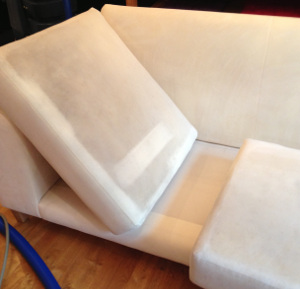 Adding a stylish sofa to your interior will make it more elegant than ever. But it will also make your housekeeping job tougher. Keeping such furniture clean and shiny is not a harsh task if you rely on a professional sofa cleaning company Kensington and Chelsea SW. We offer you commercial and domestic sofa cleaning service at fraction of the cost! We guarantee you full customer support services - 24/7 with no exceptions.
So do not hesitate, and give us a call on 020 3404 1646. Make an order or ask a question to get more details about our expert sofa cleaners right away!
- Fixed competitive prices, no hidden charges
- Flexible payment methods: cash, credit, debit, check, bank transactions
- Flexible schedule, no re-scheduling fees
- Expert detergents & powerful machines
Benefits Of Booking Our Suede & Leather Sofa Cleaning Service
To make your sofa shiny, bright, nice-smelling and hygienic again, we have two alternatives for cleaning and organic deodorizing products. Find out more about the modern leather or sofa sofa cleaning Kensington and Chelsea SW methods now:
- Pre-treats all stains, high traffic areas and dirt patches with the proper detergents.
- Moving furniture around to ensure access to all areas of the sofas.
- We also take into consideration the PH scale of the material, whether the chemical is an acid or and alkaline.
- When the pre-treat is alkaline, the rinse must be acid, so they neutralise each other and the textile is kept intact.
- We use the hot water extraction on all manufactured materials and old sofas that need deep steam cleaning.
- Our sofa cleaners leave overshoes in case of steam cleaning. Drying takes up to 3 hours.
- Upon request we can bring Air mover system to help upholstery dry 3 times faster.
- Upon request we can apply protection spray called Scotchgard.
- Dry cleaning solution is applied for 100% natural, hand-knotted and other luxurious sofa.
Professional Sofa Cleaners Kensington and Chelsea SW
RDA Cleaning & Maintenance Ltd. has always been approaching each customer with an individual manner. This is why we have managed to compose one universal sofa cleaning service that can suit anybody`s needs. The skilful sofa cleaners are instructed to start the procedure with testing products and finding the most appropriate method for cleaning. Our sofa cleaners Kensington and Chelsea SW treatment methofd is suitable for all material types: synthetic, wool, cotton, linen, silk, viscose, organic fibre, suede, plush, chenille, nubuck and acrylic. We can remove all spots and stains: oily, vomit, wine, coffee, urine and etc. Vacuuming is included in the price, too. We also pre-treat the area for maximum impact on the bacteria. Dusting reduces the allergen agents to the minimum.
Effective Cleaning Techniques
Dry-foam sofa cleaning
This is an affordable sofa cleaning method. It allows us to precisely remove stains and accumulated dirt from natural and synthetic leather. The dry foam is applied by hand on the affected area. It is left to react with the stains for about 10 minutes. Afterward our technician uses a soft brush to gently agitate the dirt away from the pores of the leather. The foam is then wiped off with a cotton towel. If there are still dirt marks present, a more thorough detergent is used to open the pores of the leather. This allows us to deeply clean it, though it takes longer.
Dry sofa cleaning
Using a dry detergent we are able to remove dirt, pet hairs, wet and dry stains and quite a lot. This method is used on natural materials like silk and cotton that would otherwise shrink if exposed to heat or moisture. The detergent is applied and is further embedded into the fibers of the sofa with a fine brush. After a 15 minute wait the detergent had already reacted with the stain and has removed its bond to the fibers. Now it is safe to remove. Using a strong vacuum machine we extract the stain along with any other contaminants as well as the detergent (which is fully bio-degradable and safe to use in homes and offices). There is no drying required.
Steam sofa cleaning
This steam treatment gives us the ability to remove very hard to extract stains. In cases where the stains are especially hard to remove, we use a pre-treating cleaning agent which loosens the fibers and the stains grip of the sofa’s material. Using a high powered steam jet we inject a stream of steam into the affected area while simultaneously drawing out all of the moisture and gunk out with a vacuum.
Book Sofa Cleaning Kensington and Chelsea SW Appointment Today!
Hurry up and make a quick and simple reservation for our affordable sofa cleaning service in Kensington and Chelsea SW. Don`t hesitate to call us on 020 3404 1646 right away! Get a free quote or make a direct order via our online booking form today!